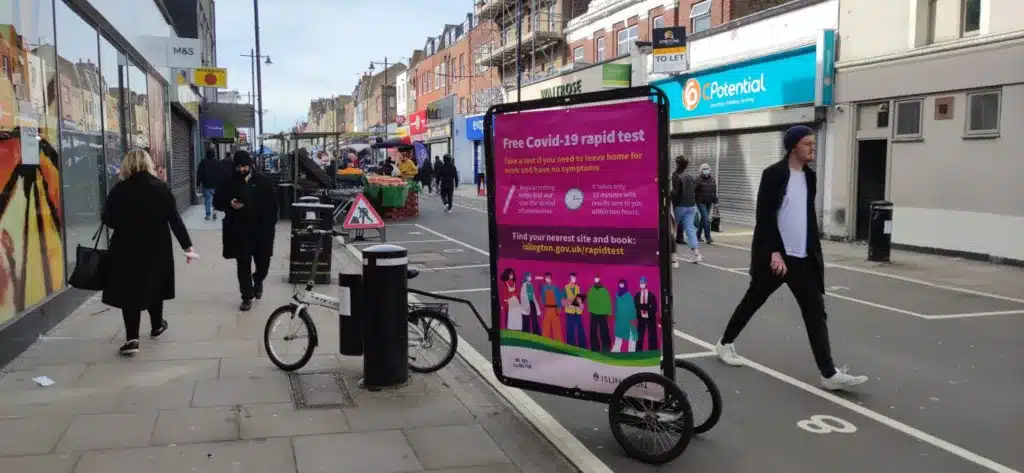
This is a documented example of a trike format within local outdoor work. It sits alongside our ad bike and human billboard history, showing why the equipment and operating scope should be named precisely in a brief.
On a small screen, scroll the table sideways to compare every column.
| Campaign | Details |
|---|---|
| Organisation | Islington Council |
| Area | London |
| Reported period | 11–19 March 2019 |
| Format | Advertising trike |
| Quantity recorded | One |
Specify the configuration
An advertising bike and an advertising trike should not be treated as interchangeable labels when planning production or operations. Ask which configuration will be used, obtain its artwork specification and agree the locations and tasks suited to that setup.
For a council brief, the proposal should also identify the person approving the message and the destination for detailed public enquiries. The operating team needs a clear account of what it is expected to do and how to escalate questions or changes.
Connect the schedule with the report
A campaign period describes the dates covered by the activity; it should be read with the operating schedule, rather than assumed to mean continuous advertising throughout every calendar day.
For a new campaign, agree the days, hours and reporting records before booking. Photographs, location information and a record of material changes can help the organisation review delivery against that scope.
Planning similar work
Start with the public-information objective, the area and the important dates. Identify any access requirements, approved wording and response destination. Then consider the equipment and staffing needed to carry out the task.
Explore advertising-trike options, public-sector campaigns or London planning. Send your local campaign brief.