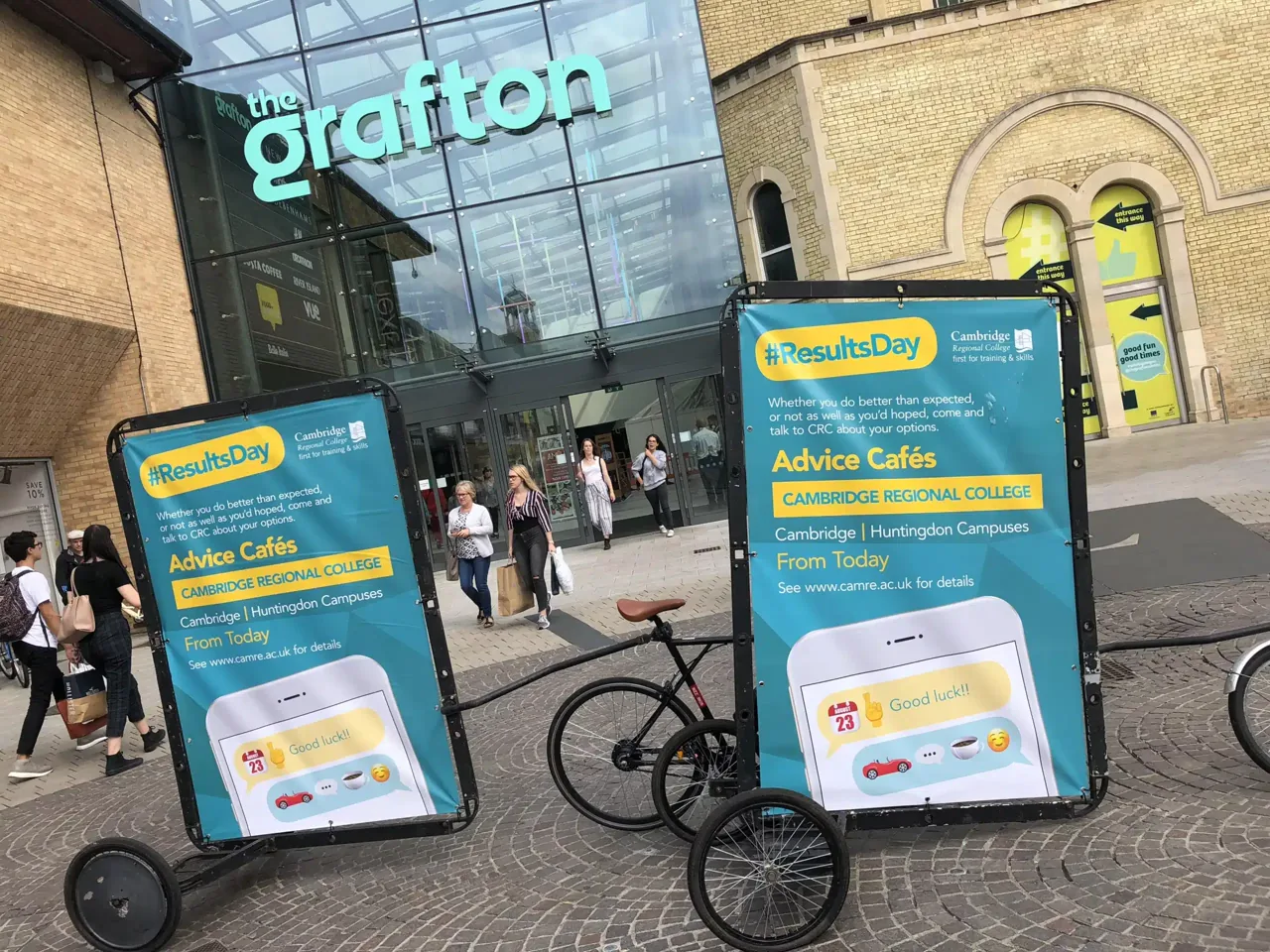
The work brought a college message into places where people could see it and ask what to do next. The questions reported by the campaign team concerned courses, campuses, enrolment and the college’s Advice Cafés.
A location plan for each day
On 22 August, the deployment plan allocated individual bikes to locations around schools and colleges in Cambridge and nearby communities. Giving each bike a defined area made this a coordinated local deployment, rather than a single group travelling the same route.
The following day’s activity covered Cambridge and Huntingdon. The location plan included central Cambridge destinations such as the Grafton, Grand Arcade and Parker’s Piece, alongside station and town-centre locations.
The two-day structure illustrates a practical choice for college marketing: use the timetable to decide where the message will be most relevant, then brief the operating team by location and day.
Connecting the display with useful information
The team reported questions about courses, campus locations and enrolment. Other questions concerned apprenticeships, adult learning and fees. People seeking more information were directed to the college’s website and contact channels.
That distinction matters when planning education activity. A street campaign can make the college visible and point people towards the right information. Detailed course advice and individual admissions questions need an appropriate college contact or information service.
Delivery and learning
The campaign reports brought together deployment details, location information and observations from the people working on the activity. The useful learning was not simply that the bikes had been on the street: the questions helped identify what information people wanted next.
For a new college brief, connect the artwork to a current admissions or event page, give the team clear directions for common questions and agree how observations will be passed back. Measure subsequent enquiries and enrolments through the college’s own systems if those are part of the evaluation.
Planning a college campaign
Start with the date or decision point: an open event, a results-day information service or a recruitment period. Send the priority locations, operating times and the approved next step for prospective students. If several areas are involved, identify the message and contact destination for each one.
Explore campaigns for education or send your dates and locations. For the operating options, see ad bike hire.