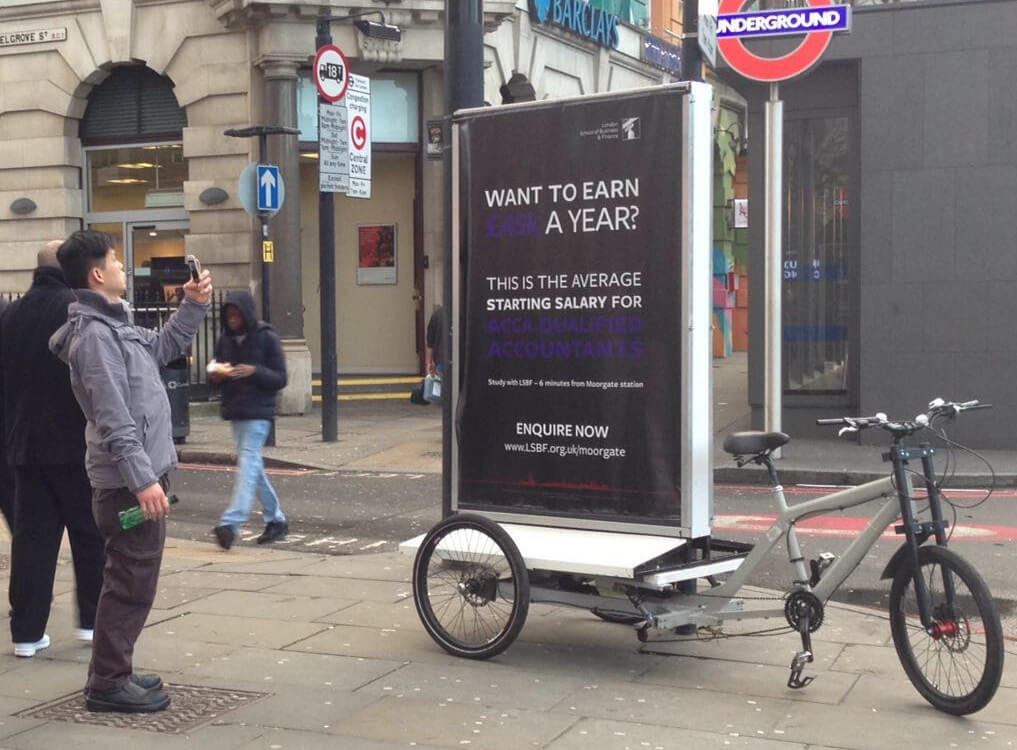
Colleges & education
Open days, enrolment and recruitment across campus catchments.
Explore colleges & educationChoose the format around the place, time and action your campaign needs. The Bike Ads arranges street-level activity and wider outdoor media across the UK, combining direct campaign experience with specialist operators and media-owner inventory where required.
Talk through your brief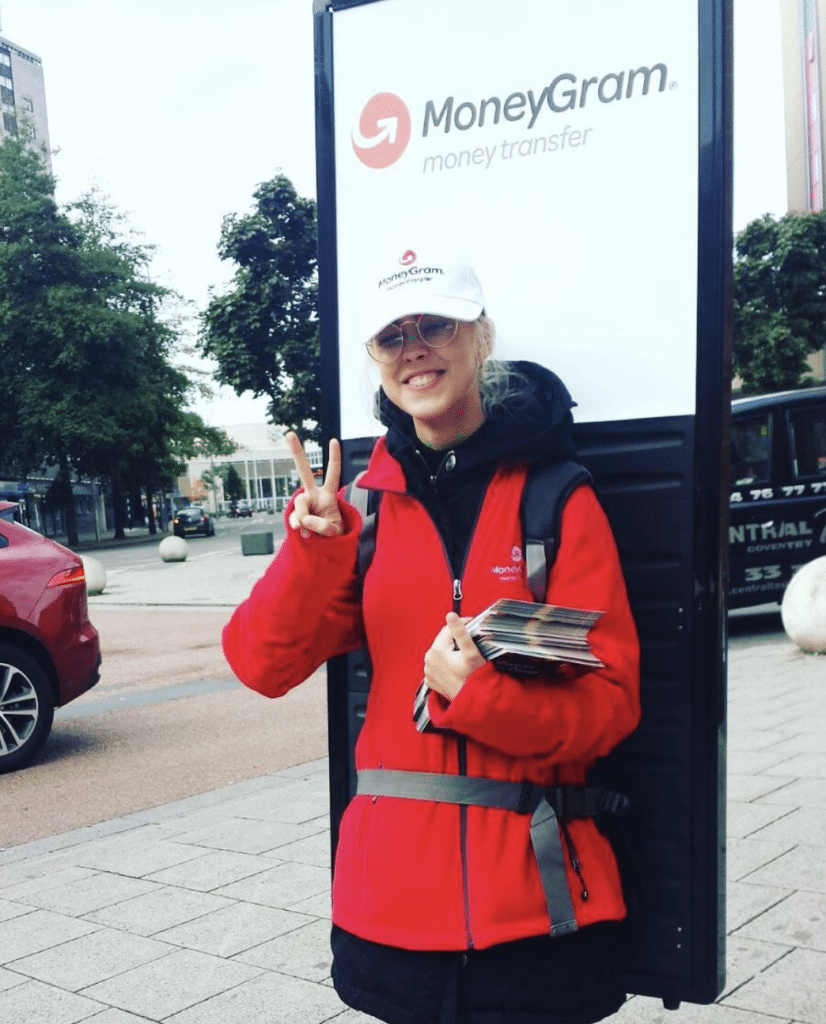
Street-level activity, mobile screens and fixed or transport media. One brief can bring several formats together.
Local routes, operating sessions, display format and campaign team
Hire ad bikesDisplays carried by people at agreed pedestrian locations
Plan a Human Billboard campaignDistribution, directions, participation or other defined tasks
Brief a street teamA specific equipment configuration for the proposed activity
Discuss trike optionsMobile LED display, road route, operating hours and creative
Explore digital ad vansAvailable fixed sites, print formats and display periods
Explore billboard advertisingAvailable screens, scheduled playback and creative versions
Explore digital outdoorExterior or interior formats, fleet area and booking period
Explore bus advertisingStations, lines, printed formats and digital inventory
Explore Tube advertisingWe coordinate the agreed campaign and work with specialist operators and media owners where required. Your proposal identifies the available equipment or inventory and delivery responsibilities.
A fixed placement can maintain a message while bikes or staff support a specific moment nearby. A digital ad van can serve a planned road route while a separate team handles a participation task. Give each format a clear role, with its own locations, timetable and reporting.
Use the comparisons below to assess street formats and the wider outdoor mix. There is no universal winning format; the useful choice is the one that fits the brief and can be delivered as agreed.
If you need temporary kit or equipment to keep, follow the managed, DIY and buying comparison. Equipment hire and purchase are different scopes from booking a staffed campaign.
Start with your locations, dates, audience and objective. Add the preferred formats, creative status and budget range if known. We will discuss the available options and set out what the proposal includes.
Start with what you need to happen on the street. An ad bike carries a display along an agreed route or between locations. A human billboard puts an advertising panel on a person working on foot. Promotional staff carry out agreed tasks such as leaflet distribution, directions or a campaign introduction.
These formats can work together, but the people, locations and tasks need to be planned separately.
On a small screen, scroll the table sideways to compare every column.
| Your priority | Format to consider | What to put in the brief |
|---|---|---|
| Take one clear message around a local area | Ad bikes | Priority streets, locations, timings and the message people should remember |
| Put a visible message at selected pedestrian locations | Human billboards | Positions or walking routes, working hours and access arrangements |
| Give people a leaflet or explain their next step | Promotional staff | Materials, approved talking points, handover arrangements and the action you want people to take |
| Combine a moving display with face-to-face activity | A planned mix of formats | Separate roles, staffing numbers, operating areas and reporting for each task |
An ad bike campaign needs more than a list of busy streets. Identify the audience and the moment the message will be useful: a college information event, a gym opening or a local shop promotion. Give the operator the priority locations and times, then agree a workable route.
Keep the main artwork clear. A location, date or short next step may matter more than a long list of features. Match the display specification to the equipment being booked; an electric-assisted bicycle does not automatically have an LED advertising screen.
Human billboards can support a local message on foot, including near the places where people make a relevant decision. Agree where the team can work, whether they will move between positions, and what they should say if approached.
A display carried by a person does not automatically include leaflet distribution, sampling or a detailed sales conversation. If those tasks matter, include them in the staffing brief and the quote. A historical MoneyGram booking planned AdWalkers across Birmingham and Coventry, illustrating a staffed campaign brief rather than a poster-print order alone.
“Engage the public” is too broad to brief consistently. Specify the task: hand out a leaflet, point visitors towards an event, introduce an approved offer or direct someone to a booking page. Explain how to handle questions outside the agreed brief.
Confirm who supplies the materials, how they reach the team, what happens if stocks run low and how any counts will be recorded. A count of leaflets distributed is different from a count of conversations or completed enquiries.
Do not assume that they can. Cycling, carrying a display and stopping for longer conversations place different demands on a shift. Discuss the tasks and whether separate staff are needed. In The Bike Ads’ JustPark Birmingham campaign, ad bike activity and promotional staffing appeared together in the campaign scope.
Choose the format that fits the job, then agree how you will assess it. Photographs and operating records show delivery. Leaflet counts, tracked visits or enquiries answer different questions. None of these formats comes with a universal conversion rate.
Send your locations, dates and objective. Include the action you want people to take, and whether you need display, distribution, conversation or a combination.
An ad bike gives you a display that can move between agreed street-level locations during a campaign session. A roadside billboard gives you a fixed position for a booked period. A digital screen adds scheduled creative playback, while bus and Underground advertising place the message within a transport network.
The choice depends on where the audience is, when the message matters, the creative you want to use and the evidence you need afterwards. A campaign can combine formats: a fixed display may provide continuity while bikes or staff support an opening day nearby.
On a small screen, scroll the table sideways to compare every column.
| Format | What you can plan | Creative | What shapes the cost | Delivery evidence to agree |
|---|---|---|---|---|
| Poster ad bikes | Agreed streets, positions and operating sessions | Printed panels with a clear message; a new version needs production | Bikes, riders, hours, print, transport and additional tasks | Operating record, locations, photographs and any changes |
| LED ad bikes | Agreed route and sessions with screen-based creative | Stills or motion supported by the booked display; confirm specifications and playback | Screen configuration, riders, duration, transport and creative preparation | Operating record, proof images and any available route/playback records |
| Digital ad vans | Road routes and suitable stopping positions for a mobile LED display | Screen-specific stills, video or animation, subject to operating restrictions | Vehicle/display, driver, campaign days, routing, travel and production | Route and timing records, proof photographs and available playback information |
| Static billboards | A named site for a booked display period | Printed artwork fitted to the site’s specification | Site, size, duration, production, posting and removal | Posting confirmation, site list and installation photographs |
| Digital out-of-home screens | Named screens or a defined network and booked schedule | Screen-specific assets, with still/motion rules set by the media owner | Location, screen package, time, slot length, share of voice and production | Booked schedule, proof of play or delivery report where supplied |
| Bus advertising | A fleet, operating area or available route package | Exterior panels or wraps, or interior placements | Format, vehicles, area, display period, production and fitting | Fleet/placement confirmation and photographs under the booking terms |
| Tube and station advertising | Selected stations, lines or network packages | Printed posters, carriage panels or digital placements | Sites, format, booking period, production and digital schedule | Placement confirmation, posting or playback information |
| Taxi advertising | The licensed operator’s available fleet and operating area | Exterior or interior formats offered by that operator | Vehicle quantity, format, period and production | Vehicle/placement confirmation; movement varies with journeys |
Taxi advertising is included here as a format comparison. Ask about the specific fleet and availability if it is part of your brief. It should not be treated as a vehicle you can route like a dedicated ad van.
Choose a moving format when several nearby locations or a particular sequence matter. A college might brief different areas on different days; an opening campaign might work around the neighbourhood before focusing on the venue at a set time. The route still needs to be practical, with access and stopping arrangements checked.
A fixed site can suit a message that needs a consistent presence over a longer period. Its value depends on that location and viewing context. Compare the actual available site and dates, rather than assuming every billboard in a city offers the same opportunity.
Transport media follows a different pattern. You buy the available fleet or network package; you do not normally direct a scheduled bus to circle your event. Ask what is guaranteed about the operating area and what can vary.
Print can suit a consistent message that remains relevant throughout the booking. Digital can support different creative versions or scheduled playback, subject to the screen’s capabilities and approval rules. Full-motion creative is not permitted or appropriate on every digital placement.
An electric-assisted bike is not necessarily a digital advertising bike. Confirm the display separately from the vehicle’s propulsion. For every format, request the actual artwork specification before commissioning the final design.
Keep the viewing context in mind. A moving street display, a bus interior and a station screen offer different reading conditions. Match the length of the message and the next step to the way it will be encountered.
A three-hour staffed activation, a six-hour bike day and a two-week billboard booking are different products. Compare the required outcome and scope before comparing totals. List the media or equipment, people, campaign time, artwork, production, logistics and reporting. Confirm VAT and any additional charges.
For digital placements, ask how much screen time is included and whether your creative shares a loop. For printed media, check production and fitting. For a mobile campaign, check whether travelling between locations is part of the quoted operating time.
See ad bike packages and quote details, or request a combined plan across formats.
Photographs and operating records establish different aspects of delivery. An audience estimate needs a stated source and method; it is not a count of everyone who noticed the advert. A digital playback log records playback, not individual attention.
If the campaign aims to generate enquiries, visits or sales, agree the response route before launch. Tagged links, codes and the advertiser’s own enquiry data can help, but other marketing and local activity may also influence the result. There is no universal winning format or conversion rate.
Yes. Alongside ad bikes, human billboards and promotional staff, we can arrange digital ad vans, billboard and digital screen campaigns, bus advertising and London Underground placements. We coordinate with specialist operators and media owners where the brief requires them. The proposal identifies the format, scope, responsibilities and available delivery evidence.
Tell us the audience, locations, dates and budget. You can name a format or ask us to compare suitable options for the job.
Education, retail, property, transport, fitness and public information: selected examples from our wider work with brands, agencies and organisations.
Open days, enrolment and recruitment across campus catchments.
Explore colleges & education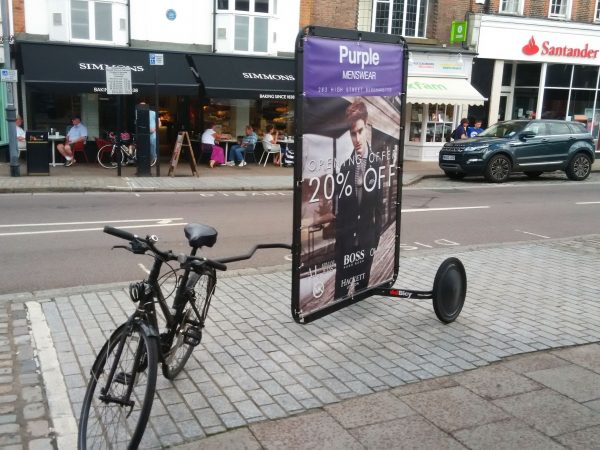
New stores, branch openings and approved local promotions.
Explore retail & store openings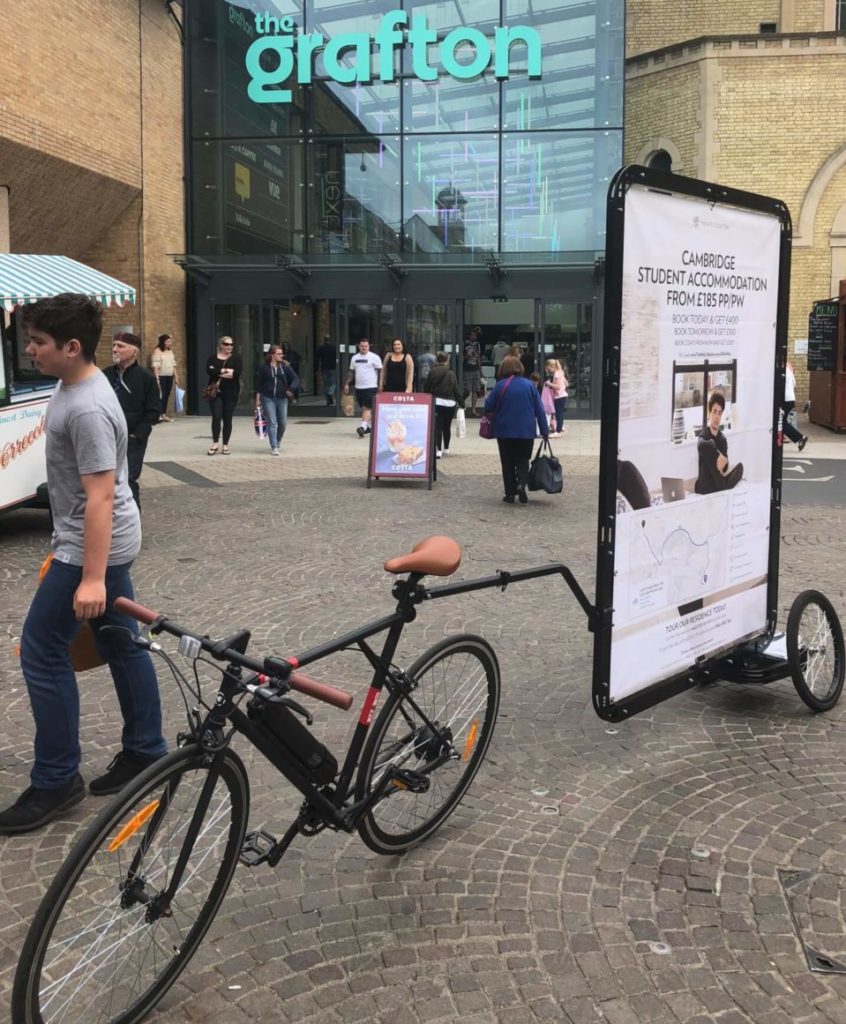
Development launches, viewing events and student accommodation.
Explore property & accommodation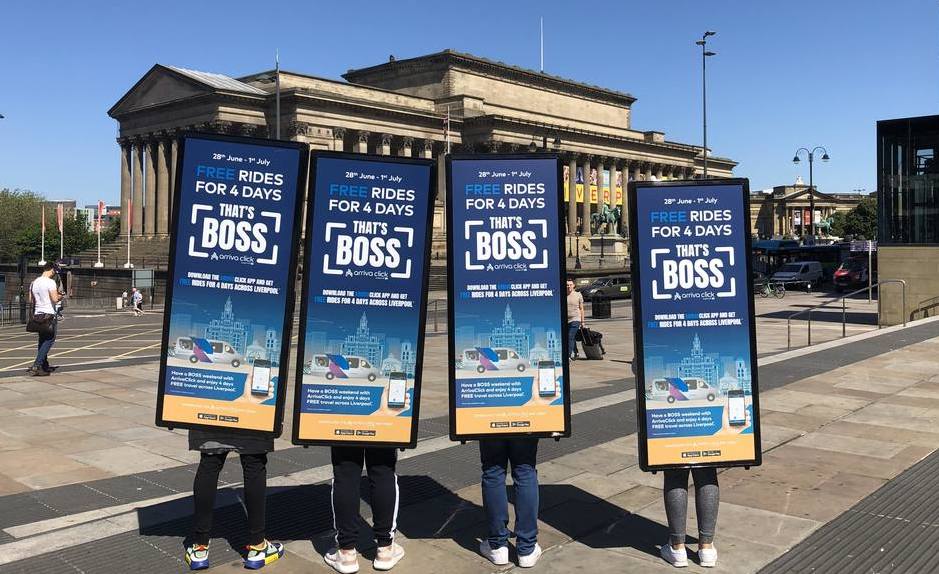
Routes, ticket offers, parking and local mobility services.
Explore transport, travel & parking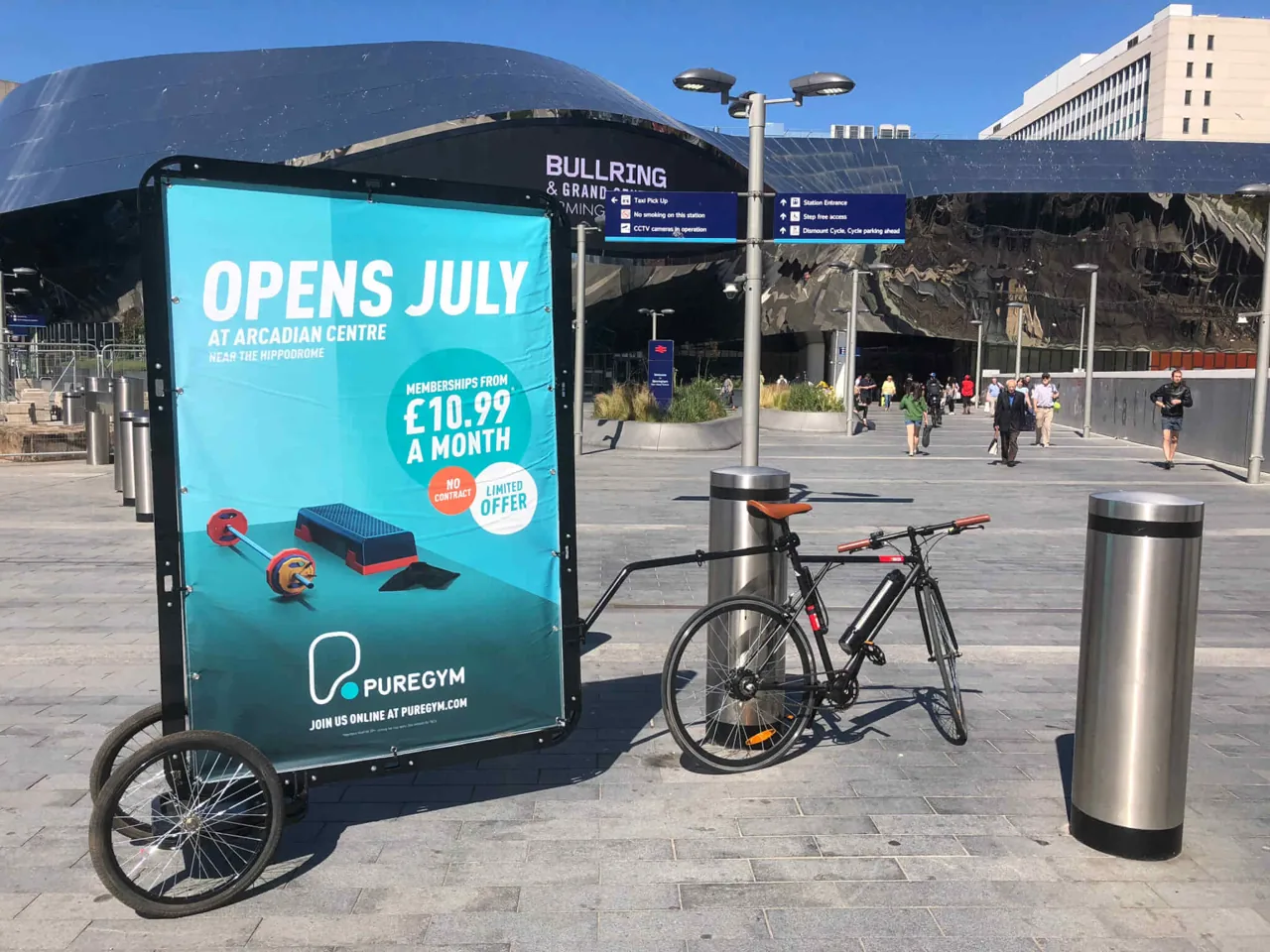
Openings, membership offers and repeat local promotion.
Explore gyms & leisure centres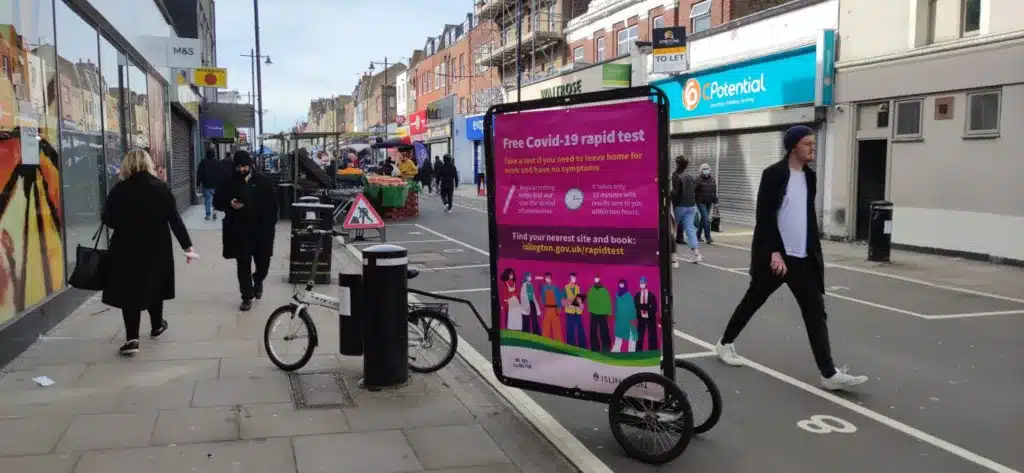
Approved local service and health-awareness information.
Explore public sector & health information